How to Clean Every Type of Tile Floor
With a reputation for being durable and easy to maintain, tile still tops the list of go-to flooring choices for homes. Beyond endless colors, shapes and sizes, tile flooring comes in…
By
•
With a reputation for being durable and easy to maintain, tile still tops the list of go-to flooring choices for homes. Beyond endless colors, shapes and sizes, tile flooring comes in an increasing range of materials, making it easy to find the look and feel that’s right for your space. But home housekeepers beware: When you customize your design, you have to also customize your cleaning methods. For example, ceramic and marble require very different cleaners, as do slate and linoleum, porcelain and granite, travertine and terracotta… the list goes on.
No matter what type of tile floors you have at home, this tile cleaning guide from our experts in the Good Housekeeping Institute Cleaning Lab has the tips you need to keep them squeaky clean and looking like new for the long haul. And if you’re dealing with dirty, dingy grout, we’ve been there, too. We’ll help you clean and whiten those tile grout lines when you’re ready.
What You’ll Need:
- Soft-bristle broom or vacuum attachment
- Microfiber mop or cloth or spray mop
- Water bucket
- Mild detergent
- Clean, dry microfiber cloth
- Get rid of loose dirt. All tile floors need to be vacuumed or swept before they’re washed. Because many tile materials can scratch easily, we recommend using a vacuum attachment with soft bristles or a soft-bristle broom to remove dirt, dust, hair and debris. If your vacuum doesn’t have a bare floor attachment, check if the brush roll can be turned off, a feature we look for in the best vacuums we test. Use a handheld broom in tight corners and along the edges of the room to help maintain tile floors between washing.
- Mix a mild detergent and water in a large bucket. Less is more when adding detergent to your water as too much can make rinsing difficult. For the right ratio, mix ¼ cup of a mild detergent, like Mr. Clean Multi-Surface Cleaner (a GH Seal star and one of our top-tested multi-purpose cleaners), into 1 gallon of water.
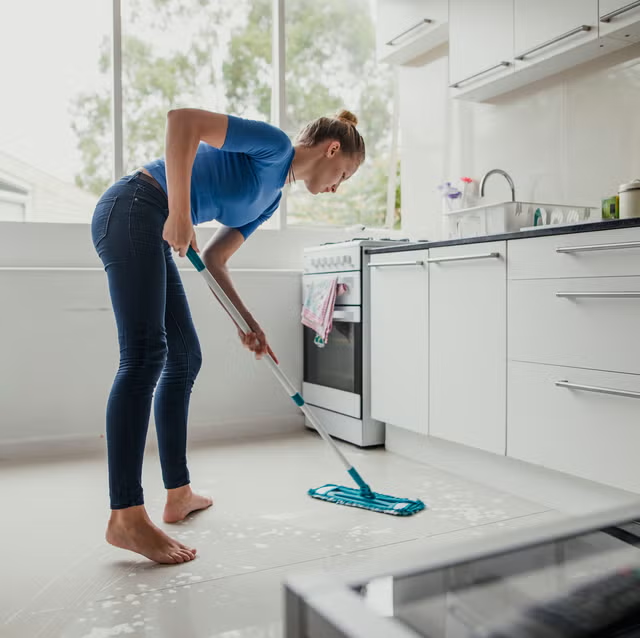
- Submerge a microfiber mop or cloth in the solution. While it’s tempting to grab a sponge to quickly wash your bathroom tile floor by hand, you could end up with unsightly streaks or water spots if you’re using too much water. Since sponges naturally retain water, it’s best to use a microfiber cloth or microfiber mop and a bucket so you can squeeze out excess water or a spray mop where you dispense the cleaning solution as you work. For larger floors, work in sections to reduce the amount of water you need to get the job done.
- Rinse thoroughly. To help make your floors shine, change the water in the bucket frequently and wipe away any leftover cleaning solution. Rinse your mop or cloth completely then use it to wipe a section clean. Repeat until the whole floor looks squeaky clean.
- Dry to avoid spots. Unglazed tiles can be left to air dry, but we recommend wiping glazed tiles with a clean, dry microfiber cloth to prevent water spots.
How to Clean Vinyl Tile Floors
Made from PVC, vinyl tile flooring is a low-maintenance, durable option that is often waterproof and therefore is very easy to clean. Simply follow the same floor cleaning steps above. To remove scuff marks, use a cloth dipped in rubbing alcohol or baking soda, then rinse off.
How to Clean Linoleum Tile Floors
Linoleum tile floors can also be cleaned following the same step-by-step instructions above, with one small tip. Linoleum is a synthetic material that’s not meant for high moisture, so definitely skip the steam mop on these tiles.
Water can quickly seep under the tiles if it’s not sealed properly, causing deterioration. Instead, try a convenient spray mop, like GH seal star Swiffer Wet Jet, that lets you control how wet the surface gets. Have a stubborn mark on your hands? Very gently rub it away with a dampened delicate, non-scratch scrub pad, but note that this will likely also remove any wax finish from the tile too.
How often should you clean tile floors?
Your cleaning needs depend largely on your household’s habits and foot traffic, but regular tile cleaning is essential to maintaining your tile flooring and keeping the work light on cleaning day. If you vacuum or sweep a few times a week — or at the first signs of dirt and debris — then you should really only need to mop every one to two weeks. The longer you wait between cleanings, the longer it’ll take to remove stuck-on grime and restore shine the next time.